Una fuerza ascendente
un espasmo violento
un amor imposible
estallan en mi pecho
El amor de los lobos
por las sierras agrestes
por los bosque sombríos
me golpea en las sienes
De no sé dónde surgen
profundos sentimientos
febriles ilusiones
audaces pensamientos
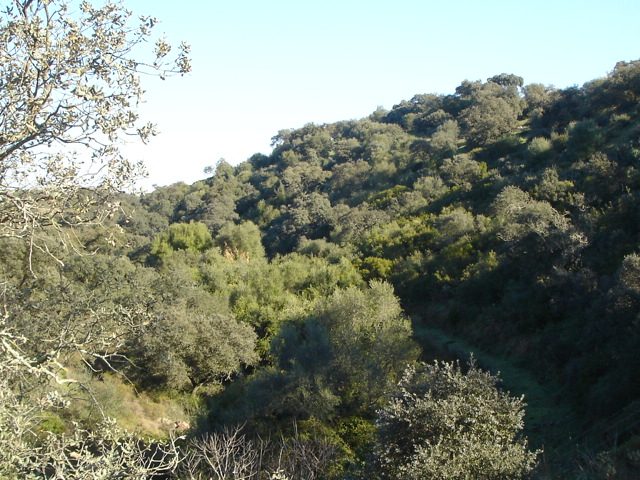
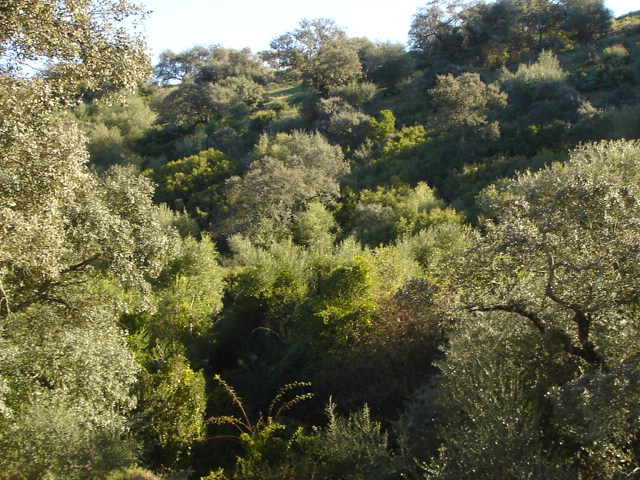
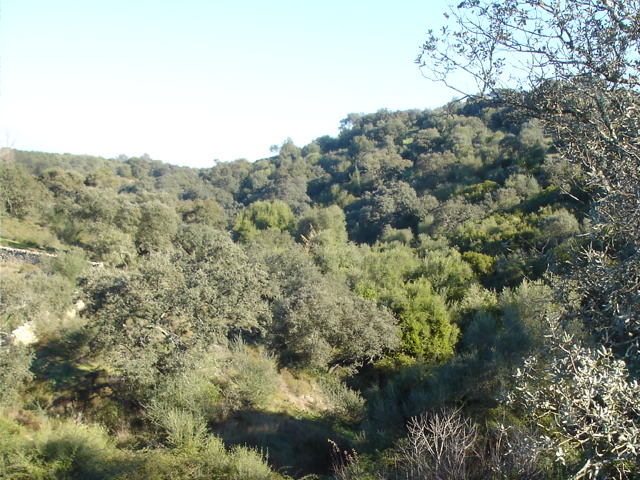

Esta obra está bajo una Licencia Creative Commons Atribución-NoComercial-SinDerivadas 3.0 Unported.
 El bosque silencioso
sounds great when read aloud
(as i just did)
i love the music of your poems…
these pictures you have taken were?
Thanks, Ludwig
I would appreciate the music of your poems (and also understand them). I’m sure the German language in your hands is a finely tuned musical instrument.
Once a student who spoke German, she recited a poem by Goethe. I was fascinated by its sonority.
In Spanish, the verses of eight syllables arise «spontaneously». But I prefer the odd verses (seven, seven plus seven = fourteen, eleven).
The photos, as almost all my photos, are in my little world, a village 27 km from Seville, located in the foothills of Sierra Morena.
Have a good weekend.
well thanks antonio, maybe every language has its own music when transformed into poetry…
of course goethe is our maestro *hehe* to whom is he comparable in the spanish world of poets? neruda, jimenez or my favorite aleixandre…?
have a fine weekend too!
You raise a difficult question. I should say Cervantes, but this writer is mostly a novelist or a prose writer. I could quote Quevedo, who was a great poet and a “bad tongue” (biting, ironic, satirical).
I personally think that Juan Ramón Jiménez is “un maestro”. I’ve recently read “Dios deseado y deseante” («God desired and desiring»), one of his last books. And I’ve written two poems under the influence of that reading.
Due to geographical proximity and aesthetic reasons, JR Jiménez is a referent.
Aleixandre is a deep poet, but quite difficult for me.
García Lorca is so popular… ( and however a great poet too).
Neruda is a god on a high pedestal.
Cernuda is another “maestro”. His books “La realidad y el deseo” (“The reality and the desire” or “Reality and desire”) and “Ocnus” (poems in prose) are two examples of lived literature, of authentic literature.
Apart from Herr Johann Wolfgang Goethe 🙂 what are the figures that make up your literary pantheon?
And a second question, are we part of a literary tradition or are we solitary slingers throwing stones at the sky?
Rilke … Heine … Benn …
Whitman … Poe …
Baudelaire … Rimbaud …
i guess, we are both,
dear antonio…
enjoy the sunny day!